

A game is not automatically more educational, and a form is not automatically boring. Both can use the same questions; the better choice depends on the kind of thinking students need, the classroom context, and what the teacher intends to learn from the attempt.
Start with the cognitive job
Use the objective to name what students must do: read closely, retrieve facts fluently, calculate accurately, explain a relationship, or persist through practice. Choose the format only after that. Visual energy cannot rescue weak questions, while a quiet form can still produce rich thinking.
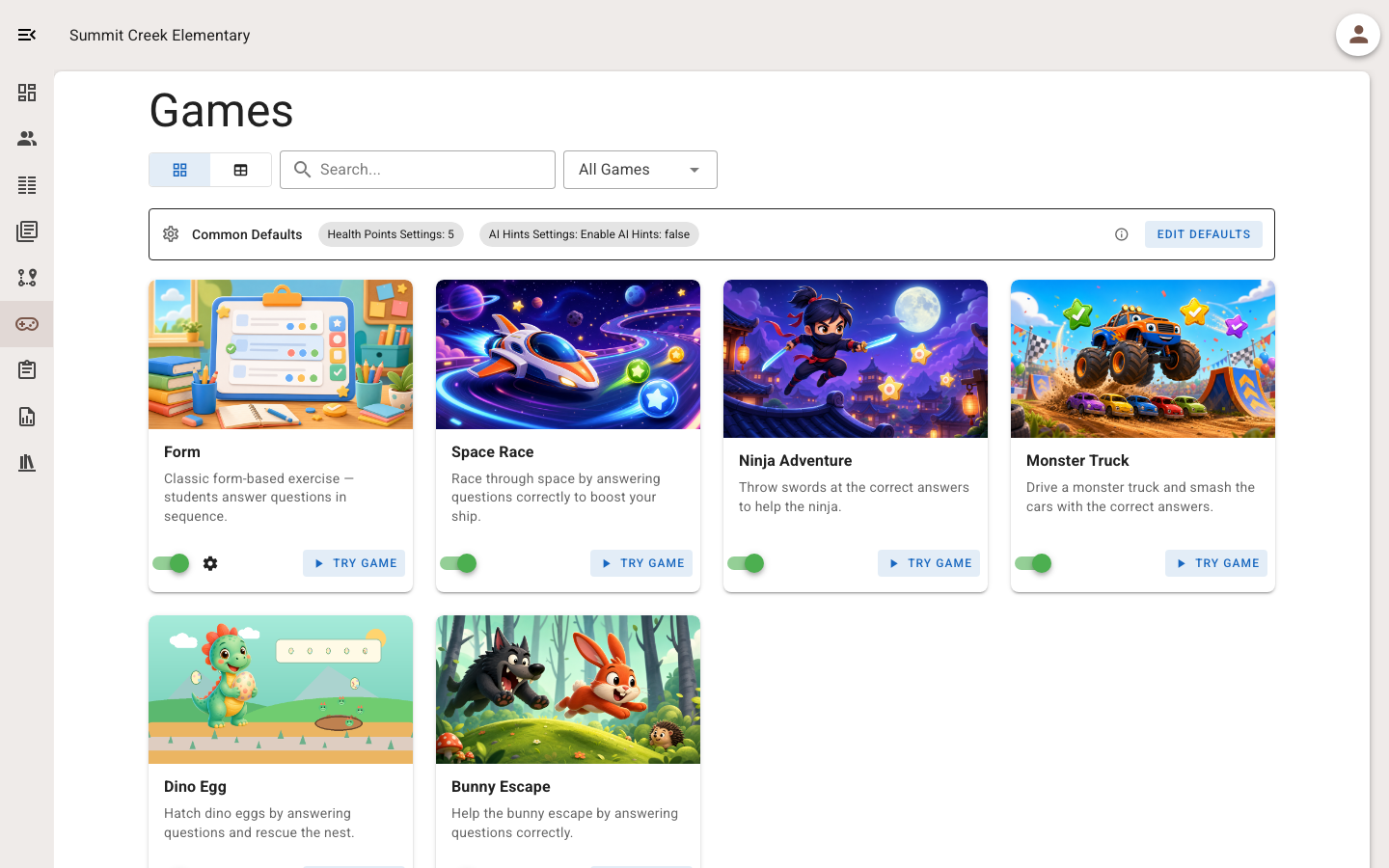
When a regular form is the stronger choice
A form suits careful reading, diagnostic assessment, sensitive topics, longer responses, and situations where speed or competition would distort performance. It also creates a stable environment for comparing question difficulty because fewer game mechanics compete for attention.
When a game adds useful value
A game can lower the barrier to starting, support repeated retrieval, provide immediate feedback, and make short review cycles feel purposeful. It is especially useful after initial teaching, when the content is familiar and the goal is practice rather than first exposure.
Watch pressure, access, and attention
Timers, lives, sound, animation, and leaderboards affect learners differently. Offer a calmer alternative, allow sound control, avoid punishing slow reading, and ensure keyboard and touch access. Motivation that depends on anxiety is not a sustainable learning design.
Compare formats fairly
If you want to test the effect of format, keep questions, feedback, time window, and student group as similar as possible. Look beyond average score: compare completion, retries, common errors, voluntary replay, and student explanation. Do not treat excitement alone as evidence of learning.
A practical decision rule
Use a form when careful thought and clean evidence matter most. Use a game when purposeful repetition, momentum, or choice will help. Offer both when learner needs differ, and change format if mechanics begin to hide the content.
- Learning goal before engagement mechanic.
- A calm option is always legitimate.
- Preview the exact student experience.
- Review learning evidence and emotional response together.