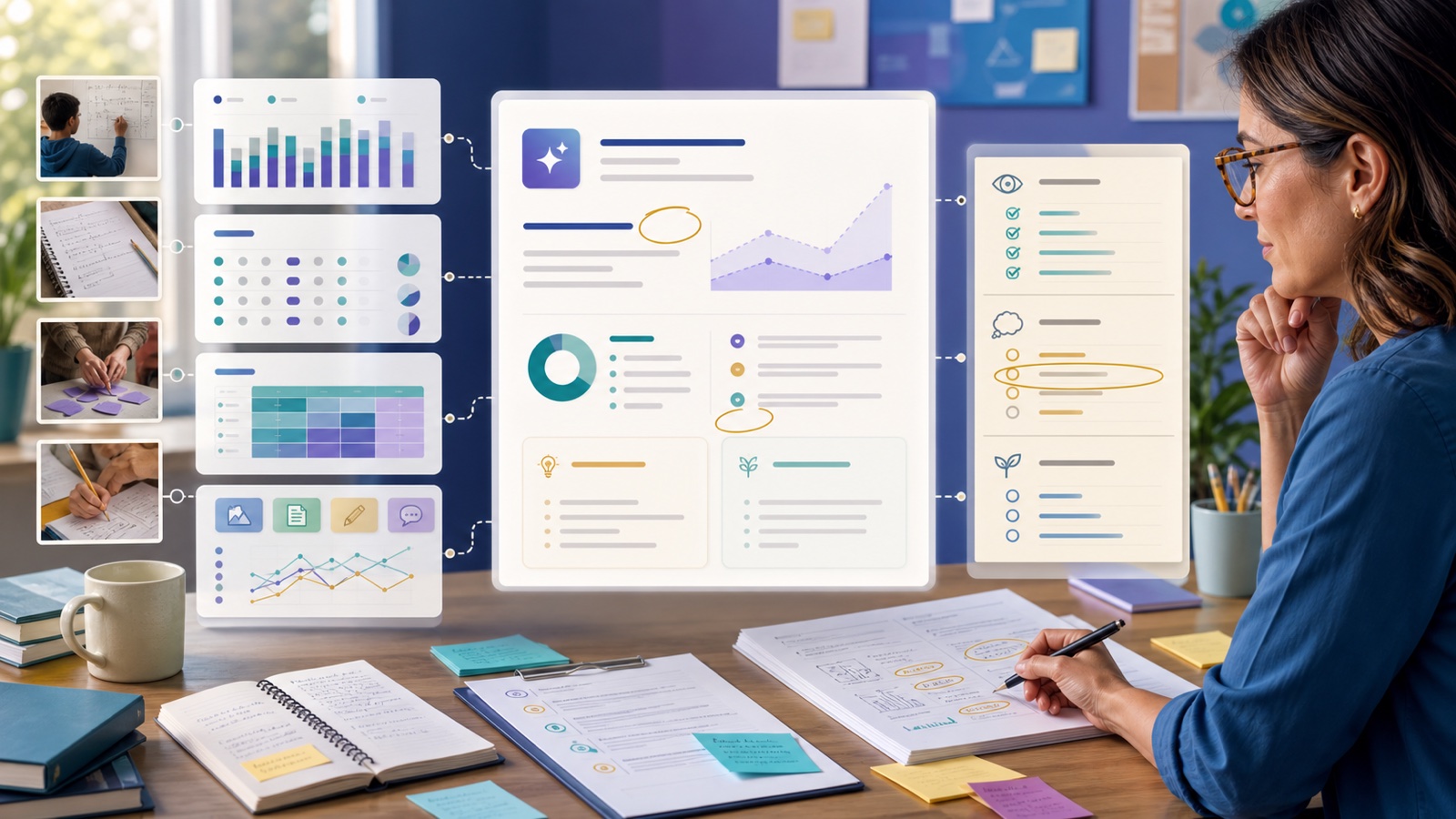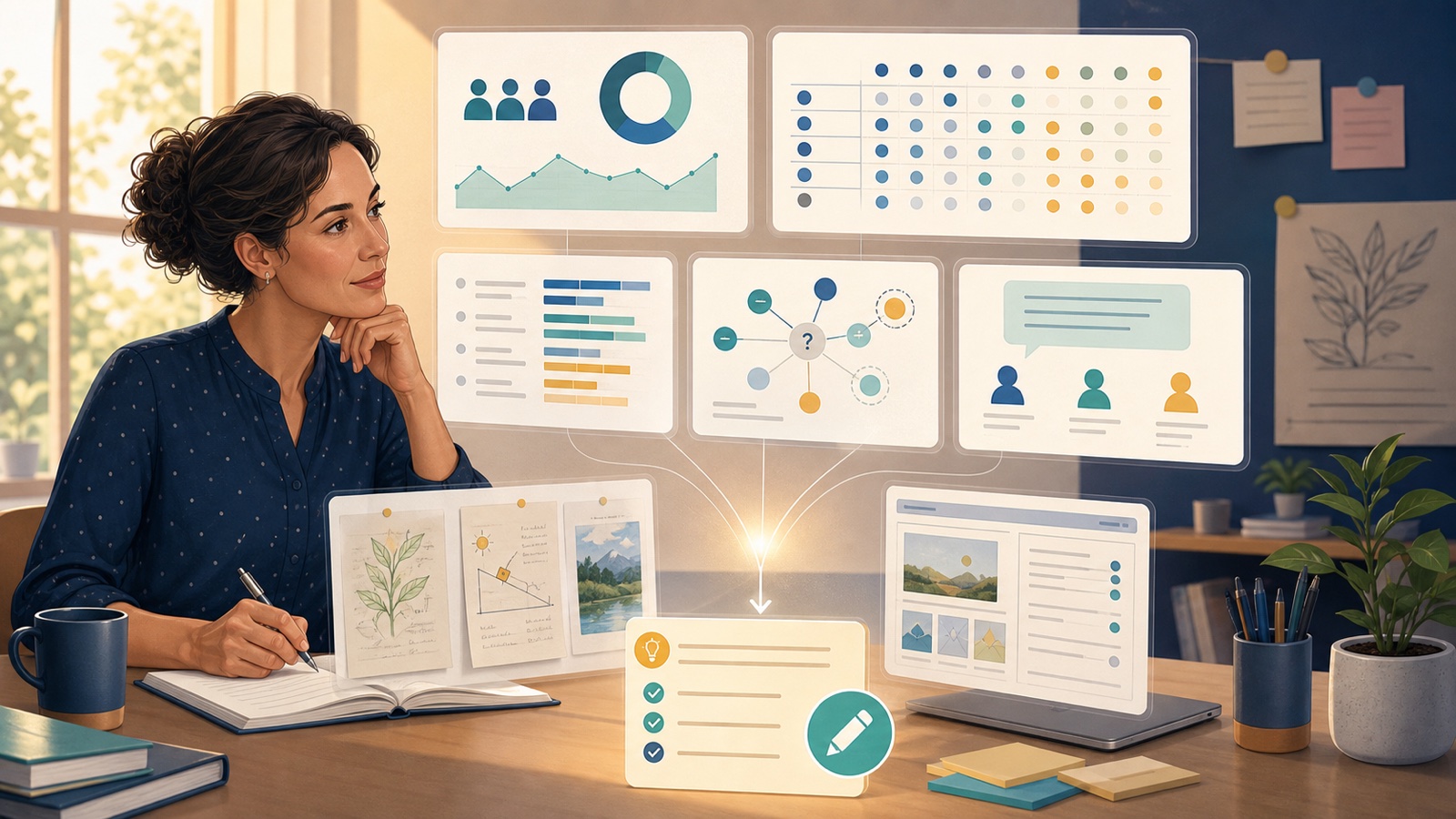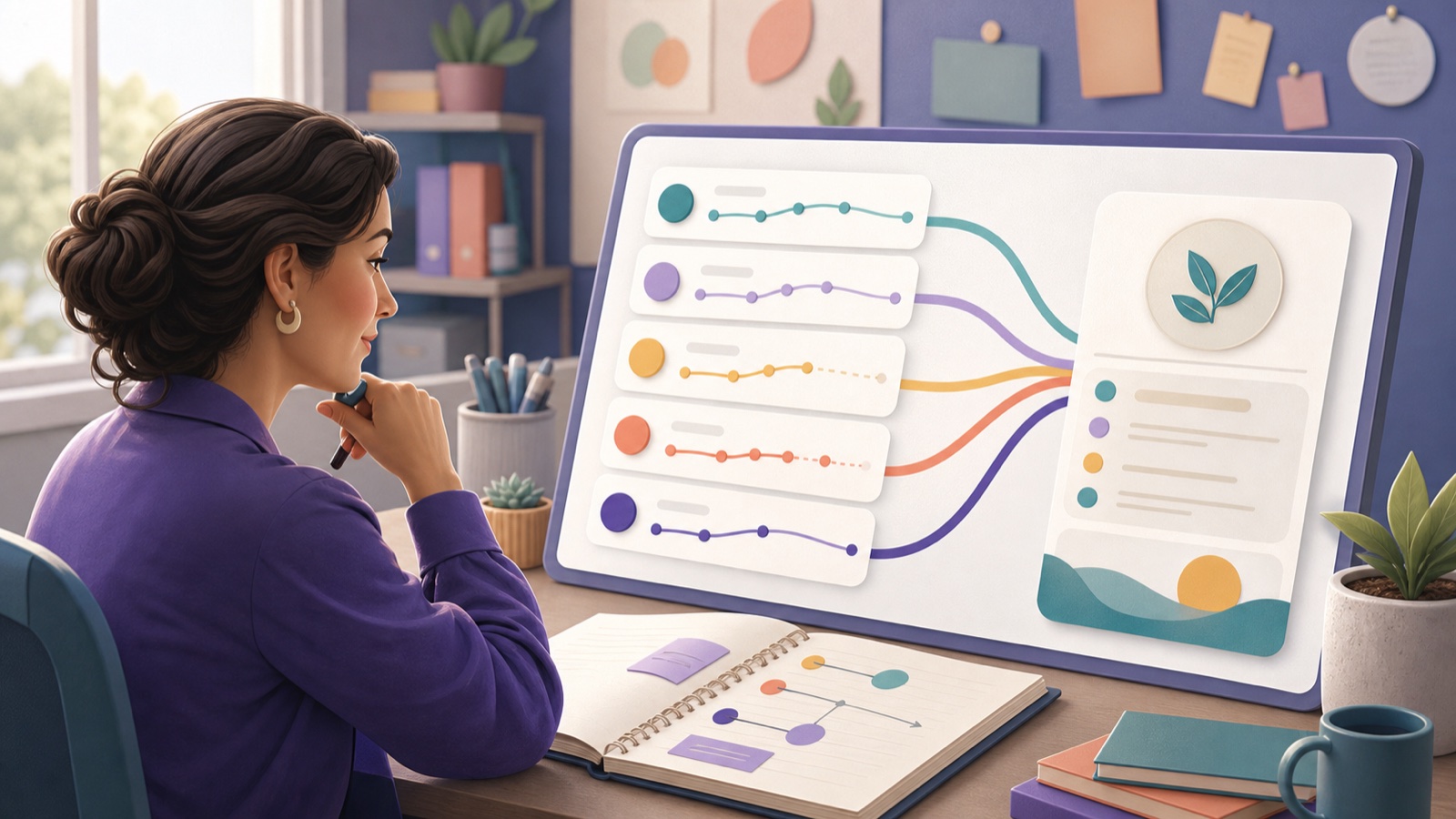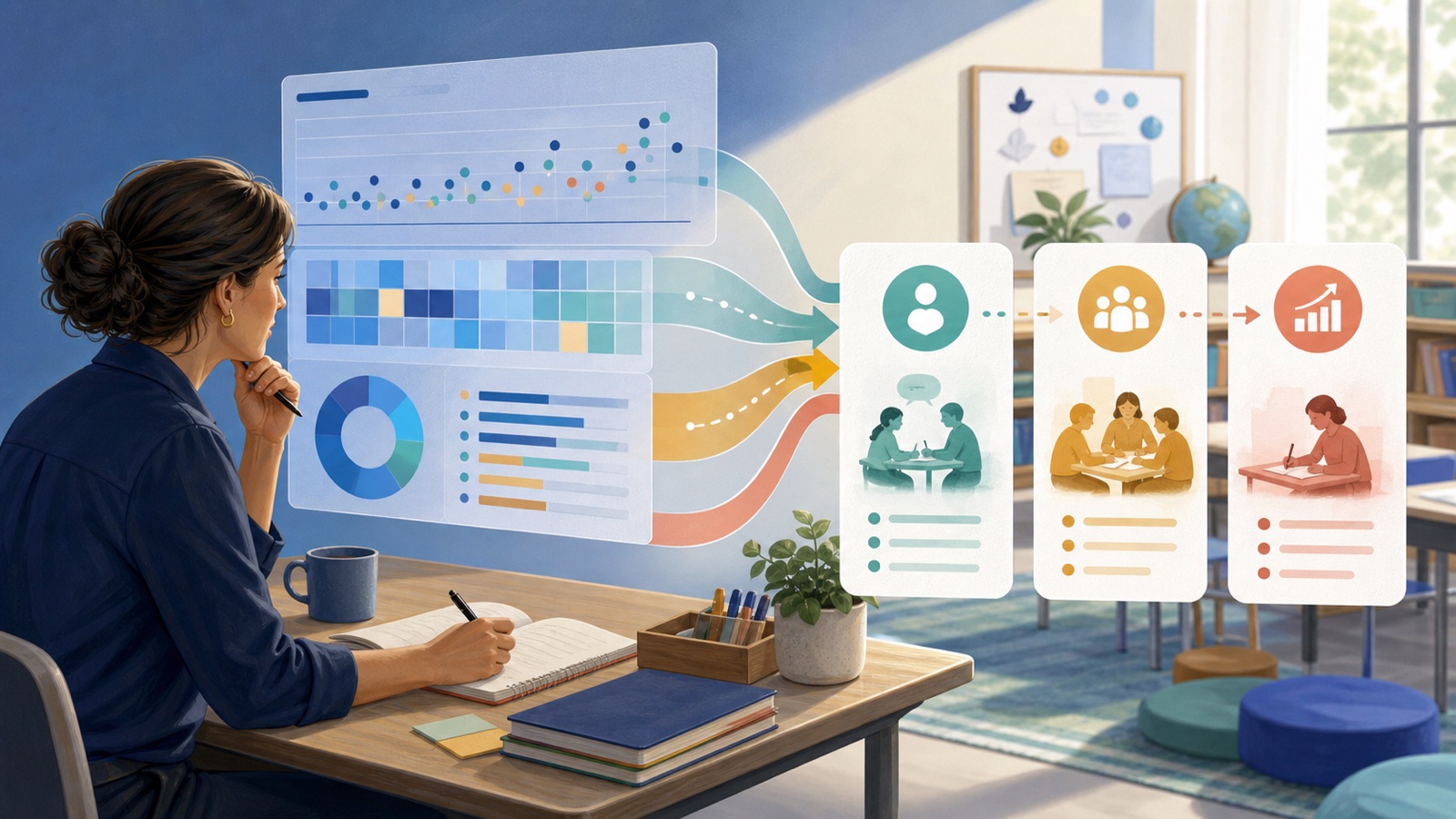
A dashboard should shorten the distance between a useful signal and a thoughtful teaching response. It should not turn every color, score, or delay into a diagnosis. This routine deliberately ends with one small action and a plan to check it.
Minute 1: choose one comparable view
Open one recent assignment, objective, class, or group. Confirm who received it and when. Avoid mixing tasks, ages, or time windows. Write a neutral observation: “nine learners missed equivalent-fraction items,” not “nine learners do not understand fractions.”
Minute 2: inspect beneath the average
Look at question responses, completion states, attempts, hints, and stopping points where available. Ask whether the pattern is shared or isolated. An average can hide one flawed question, a subgroup need, or two opposite performance patterns.
Minute 3: verify context
Preview the activity and solve the relevant items. Check wording, accepted answers, language, accessibility, devices, absence, and whether the content was taught. If evidence is unclear, the next action is a conversation or better check—not a confident label.
Minute 4: select the smallest useful response
Correct a faulty item, clarify instructions, model briefly with a small group, add a worked example, offer targeted practice, or speak privately with one learner. Do not assign extra work merely because the dashboard makes it easy.
Minute 5: define the follow-up
Write who receives the response, what will happen, and what new evidence would show improvement. Set a realistic check time. A two-question exit ticket or student explanation may be more useful than waiting for another large assessment.
Keep the record human and responsible
Use descriptive language, limit access, and avoid permanent labels from temporary signals. Record what changed so colleagues can interpret the next data point. Escalate only when repeated evidence and school procedures support it.
- Signal: what exactly happened?
- Context: what else could explain it?
- Action: what is the smallest appropriate response?
- Follow-up: when and how will we know more?