
An assignment is effective when it produces useful learning and trustworthy evidence at a reasonable cost to students and teachers. A high average or completion rate can contribute to that judgment, but neither can make it alone.
Return to the intended learning
Write the original objective beside the report. Ask whether the activity required students to demonstrate that objective or merely complete related tasks. If the questions sampled only easy recall, a strong score cannot establish deeper application or explanation.
Check who could participate
Review assignment access, starts, completion, timing, device experience, language, and accommodations. Separate absence and technical barriers from learning difficulty. An assignment that excludes part of the class cannot provide a fair picture, even when results from participating students look strong.
Inspect patterns, not only averages
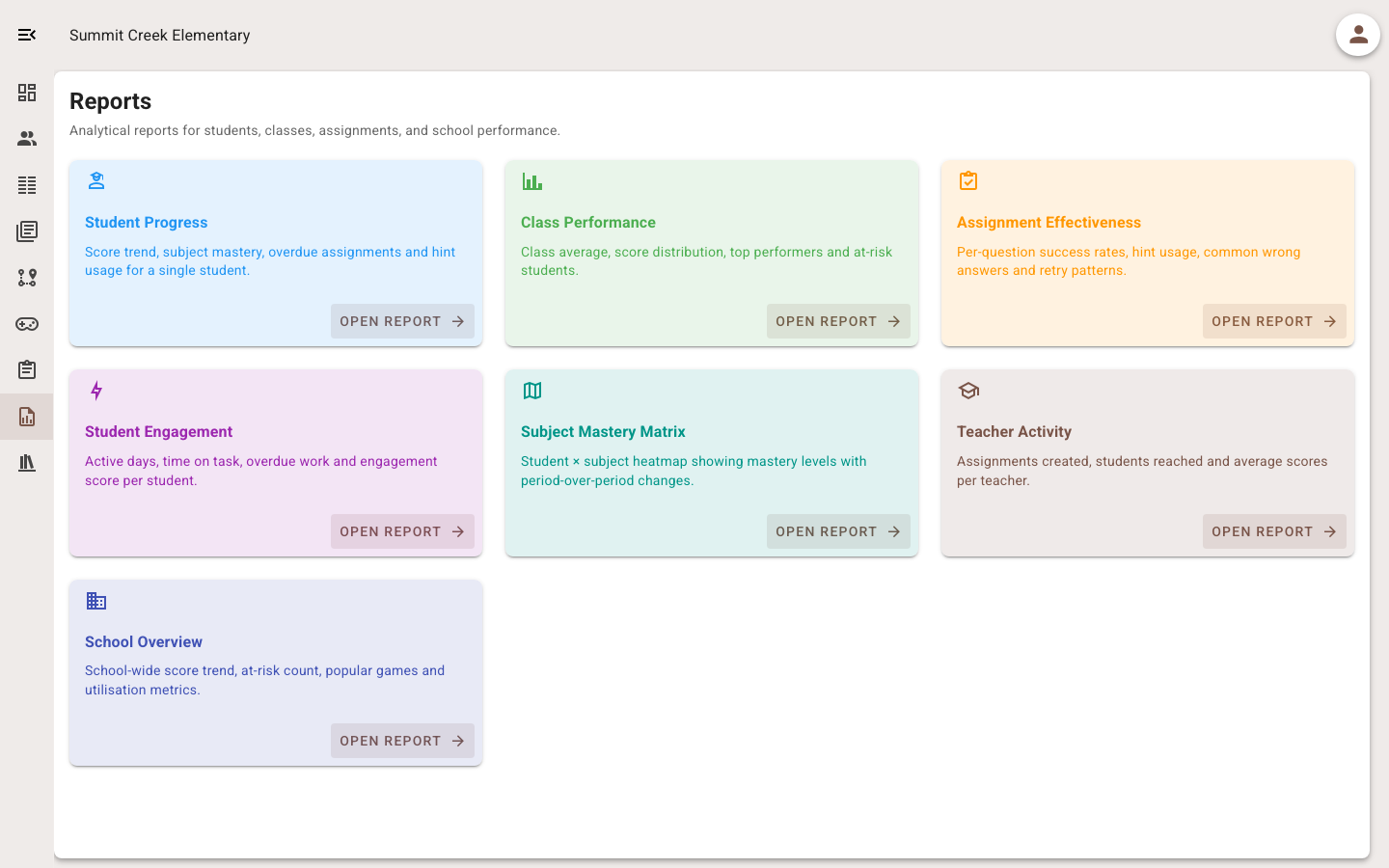
Look at item-level accuracy, accepted answers, common wrong choices, attempts, hints, and shared stopping points. Averages can hide one broken question or two groups with different needs. Preview and solve suspicious items before interpreting learner performance.
Compare the report with learner evidence
Read a sample of explanations, written work, discussion notes, or exit responses. Ask learners what was clear, difficult, or distracting. This triangulation helps distinguish genuine misunderstanding from guessing, confusing wording, excessive support, or game mechanics that changed behavior.
Evaluate the response the assignment enables
Useful evidence should lead to a proportionate action: keep the sequence, revise an item, reteach one concept, offer targeted practice, or speak with a learner. If the report cannot support a reasonable next decision, revise how the next assignment collects evidence.
Use a repeatable review note
Record the objective, participation context, strongest evidence, uncertainty, change, and follow-up date. Compare only genuinely similar assignments over time. Effectiveness is not a permanent label; it is a documented judgment that improves as the activity and subsequent evidence improve.
- Did the activity measure the stated goal?
- Could the intended learners participate?
- What pattern deserves verification?
- What will change before the next use?
- What evidence will confirm improvement?