
Useful learning analytics do not replace teacher judgment. They help a teacher notice a pattern, verify what it might mean, and make one proportionate change that can be checked with new evidence.
Start with a question, not a dashboard
Begin with one decision: who has not started, which question needs checking, whether a group needs another explanation, or whether an activity was accessible. Opening every report without a question creates noise and invites overinterpretation.
Check context before interpreting a score
Confirm the intended objective, who received the activity, whether the lesson was taught, completion conditions, language, devices, time available, and any access issues. A low score can reflect a difficult concept, but it can also reflect unclear instructions, a broken item, or an interrupted session.
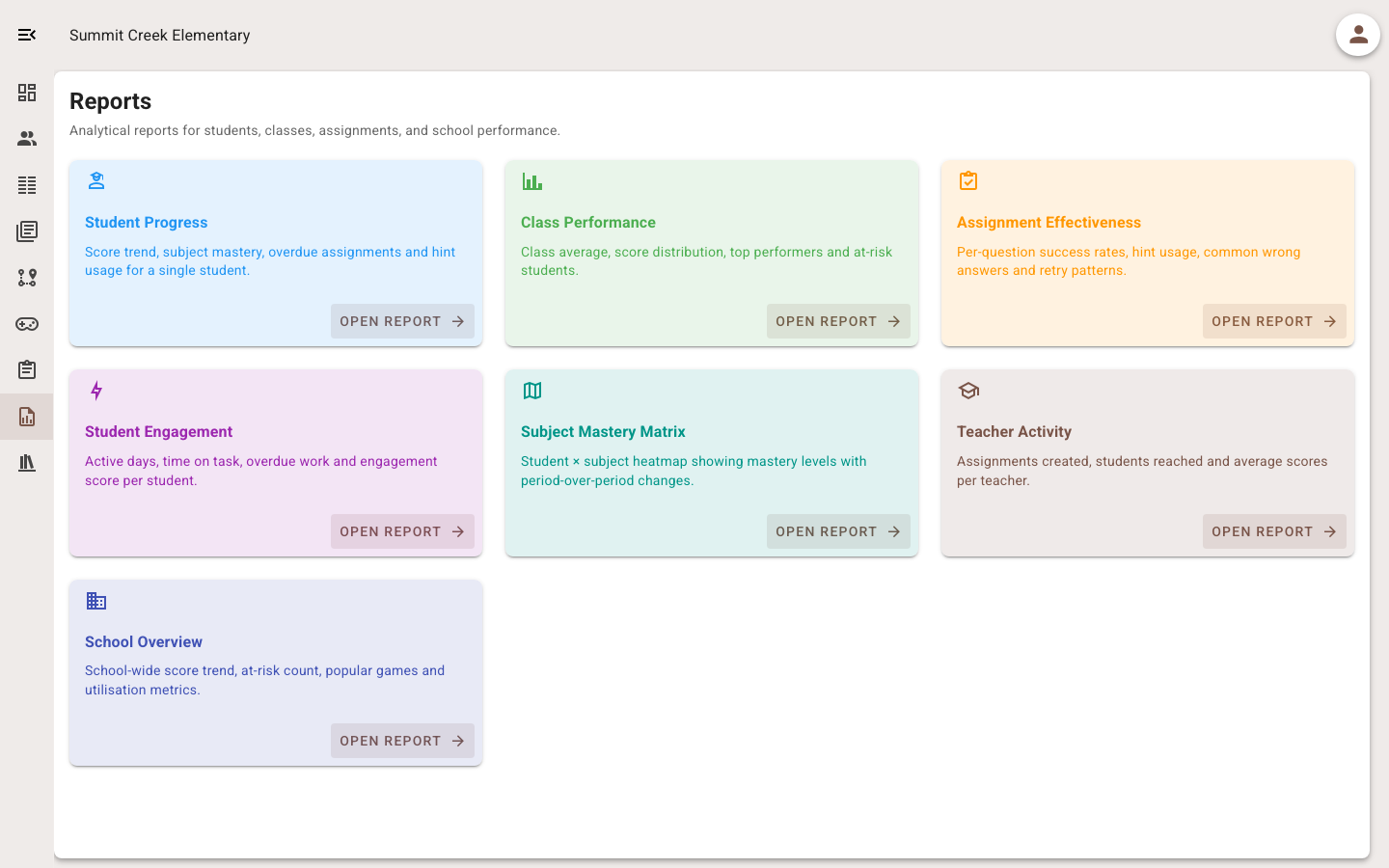
Look for patterns, not labels
Compare similar evidence: common wrong answers, attempts, hint use, stopping points, and changes over time. A pattern can suggest a misconception or an activity problem; it cannot permanently label a learner. Read results alongside student work, conversation, and the exact questions students saw.
Choose the smallest useful response
Use the evidence to make one proportionate move: clarify an instruction, repair a question, reteach with another representation, offer a short supported practice, or check in privately. Avoid assigning extra work merely because a dashboard has a red value.
Check whether the response helped
Record the original signal, the context checked, the change made, and the next equivalent evidence to review. A fresh short check is usually more useful than rereading the same dashboard. Keep uncertainty visible and revise the activity or teaching plan when the pattern does not change.
- Ask one teaching question.
- Verify context and the activity.
- Treat patterns as hypotheses.
- Make a small, reversible response.
- Check again with new evidence.